Back in 2023, I was in conversation with a coworker about what it is like to be dating at 50 and over. This subject also came up when one of my students asked me about my relationship status. Actually, I should say that we were talking about what it is like to be open to dating at 50 and older because it is now quite rare that I genuinely want to be with a man for the purpose of intimacy. On the other hand, this does not mean that I am without intimacy in my life because intimacy is not something that is limited to nor is it dependent upon the men in my life. In fact, there are many ways to experience intimacy in this amazing, wonderful life!
In order for me to desire intimacy with a man there has to be reciprocity. Unfortunately, many of my former and would-be male partners failed repeatedly to be “reciprocitious” in their day-to-day interactions with me. The inability to offer reciprocity, which is a significant part of expressing emotional maturity, as far as I am concerned, is a deal-breaker (and please note that I am not using the terms intimacy and sex interchangeably). In other words, a one-way relationship is out of question. For me to embrace a relationship as worthwhile, both of us must have the ability and willingness to give and receive. Any man who demonstrates that he has nothing to offer; that he is unable to give of his authentic self (not the same as his money, possessions, or power/positions in life); and that he is unwilling to receive unilateral gifts of love and affection from me will disqualify himself as a potential or long-term partner.
Frankly, it has come down to this: I will not spend my time nor my person with a man who is unable or unwilling to articulate and present his authentic self to me. Sadly, there are many men over the age of 50 who are in this predicament. In fact, there are many men who have absolutely no clue what the term “authentic self” actually means because patriarchy teaches them to be the exact opposite of authentic. Patriarchy, which is not the same as masculinity, is an ideological assertion that teaches boys and men to be impostors and to lie, steal, and take to get what they want, including taking the approval from other men that is gained at the expense of girls or women.
Much to my dismay, I personally know quite a few men over the age of 50 who approach relationship and intimacy from a patriarchal standpoint and as if they were 35 years old or less, again (e.g., they exhibit signs of arrested development). One of the most disappointing expressions of patriarchy for me, for example, was hearing a man brag about how many women that he had sex with throughout his lifetime – as if having sex with women was an important contribution to society. Apparently what is between his legs was something that gave him a sense of value or importance. This was very troubling for me to digest for obvious reasons. Furthermore, I am much more interested in what is in a man’s head than any other part of his body.
Not too long ago, for example, I heard from a man who knew me as an adolescent and who admitted to perpetuating a lie that one of his friends spread about me that benefited him in his social circle, yet it was a lie that was told – unbeknownst to me – at my expense. Ironically, the person who told the lie is now dead. Not that it matters to me today, because none of these former adolescent acquaintances has a significant place in my life today, but I share it to illustrate how the toxicity of patriarchal behavior that is articulated in adolescence may continue to be a reality that follows one into in adulthood.
I am also aware that many of the adult men that I could or would date may be currently struggling with mid-life issues, such as declining health, overwhelming feelings of regret or missed opportunities, or disappointment in the inevitable change in outer body appearance or physical (including sexual) ability. Nevertheless, if they do not intentionally resist patriarchy, then they too will be prone to repeat and perpetuate the destructive personal and social patriarchal patterns and the consequences that go along with it. It is a vicious cycle that some will never muster the courage to confront or break. However, if they do not break these toxic, patriarchal attitudes and cycles, I regret to say that their lives will not be much different than the ones who taught them to behave this way. Indeed, it is insane – and troubling to me – that they apparently want to keep living like this!
Given the childish/narcissistic behavior of many of the men that I know, I tend to assume that they secretly long for the return to their adolescent and young adult selves. After years of tolerating patriarchal treatment that was filled with rounds of the silent treatment; emotional abandonment; emotionally abusive behavior; angry outbursts; irrational hostilities directed at me simply because I expressed a different opinion or challenged their way of thinking; unilateral attempts to control the thermostat or anything attached to the maintenance of the apartment or house; lying (usually by omission); accusations that I was cheating because what I was wearing looked “too good” for just me or everyday attire; drunken as in intoxicated) rants and thus unpredictable behavior; constant criticisms about my choice in movies or other personal interests that I embraced; and other unbelievably childish incidents that I am simply too embarrassed to repeat.
Thank goodness, I finally decided that it was useless to spend even five minutes with any man who does not have the slightest idea of how to regulate his emotions or be in a healthy, dynamic relationship with an intimate partner.
I know that I can do much better, or I could just be with myself because I like spending time with me! Frankly, I cannot believe that I stayed as long as I did with such emotionally bankrupt men as long as I did in the past, but I am super glad that I was finally able to give up on men who apparently are not prepared for a balanced, healthy relationship. I have better things to do with my time than be with someone who will try to treat me as if I am an idiot, or as if I would not be able to see through all the emotionally abusive games that these men play.
Because of these encounters with men, I have learned many lessons, but one of the greatest is this: it is a total waste of my time to spend any serious amount of time with a man who is, at best, emotionally immature and has not accepted his own evolutionary process. The behaviors of a man who is clueless about his emotional maturity (or lack thereof) are simply unacceptable; and – therefore – emotionally immature men are unacceptable! At this point in time, emotionally immature men are not even worth it to me; furthermore, they vex me and they are hazardous to my health and well-being. Indeed, I am attracted to a man for what is on the outside, but what is on the inside, in terms of his emotional maturity or intelligence, is far more valuable to me in the long run, and that is what I pay close attention to when a man shows any romantic interest in me.
This means, for example, that I observe how a man speaks to me about women and women’s issues in general (such as leadership, employment, and reproductive rights); how he handles the unexpected ups and downs in his life; and, how he plans for his own self-care and personal growth and advancement, including the upkeep of his physical and mental health. If a man who is interested in me is only satisfied with the mediocre in his life, then I am definitely not the one for him.
Here is the thing:
My standard is excellence, not mediocrity, and if a man is romantically interested in me he will have to earn the privilege of being with me. I will no longer assume that a man has the ability to be emotionally present to me just because he shows interest in me. He will have to demonstrate that he has what it takes to sustain a healthy, loving relationship.
In some circles, it is well understood that out of all groups of women, black women are often the least chosen for the purpose of marriage. In fact, I know quite a few black women over the age of 50 – even over the age of 70 – and they live their lives alone, without a marital partner. To support this realization, author Ralph Richard Banks writes that “black women are three times as likely as white women to never marry.” This is truly a conundrum to me because 1) black women are one of the most productive groups in this country and 2) we are one of the most educated groups of women in the U.S. Yet, when it comes to marriage we are glaringly alone. Of course, I am biased, but black women are some of the most resilient, bravest people that I happen to know, so I get it that it is disappointing for some to see so many beautiful black women living their lives alone.
However, to the whole idea of being alone I must say, SO WHAT? Being alone does not mean that we are without intimacy, or companionship, or fulfillment in life; and, frankly I am not in competition with white women or any other woman about marriage. The fact that black women are perhaps the least likely to be married as other women is not necessarily a bad thing. There are lots of issues that factor into this social phenomenon, including the incarceration or death of a partner or spouse, particularly as it pertains to the disproportionate jailing of black men. Given these factors and the complexity of social realities facing black women, there is absolutely nothing wrong or shameful about being alone. In some cases, choosing to stay single might be the better choice.
If I were to offer a hypothesis (from the perspective of a social scientist), I believe that today’s status of cis-gender hetero black women may suggest that they are quietly dismantling and transcending the construct of marriage as it is articulated in Western American culture. In other words, perhaps marriage in the Western sense is not truly working out for black women, but this is not due to any fault of their own, nor should we accept any blame for what is happening socially. Many black women are rejecting marriage and traditional relationship frameworks, including childbearing, because of patriarchy and the oppressiveness thereof. Consequently, in response they are consciously choosing to stay single and they are happy with that choice (and thanks to the sacrifices of many women who went before us, we can do that!).
Think of it this way: there are many black women who are not willing to put up with the patriarchal crap that their predecessors may have been forced to put up with due to racism (also perpetuated by white women), white supremacy, and blatant forms of gender and employment discrimination. Today, we too have options and we are not limited to one group of men, nor American men for that matter. For a good read on the subject of black women navigating relationships on their own terms, I recommend, No Thanks: Black, Female, and Living in the Martyr-Free Zone, a book by Keturah Kendrick.
For many black women, like me, marriage is not completely off the table, but I do know that many of us are simply over the hype of marriage as a marker of success. Thankfully, some of us have finally come to the realization that we do not need marriage to make us who we are or anything. We are just fine without marriage or a spouse “to make us whole,” thank you very much! We are already whole – or complete – and to assert that black women need marriage to make us this or that is quite frankly sexist and comes out of a place and a way of thinking that women (at the least) should have let go of a long time ago.
For example, the idea of marriage in the Bible is rooted in polygamy, not monogamy. Can you identify one man in the Old Testament, for example, that did not have or feel entitled to more than one wife? Unfortunately, there are many men and women who formulate their ideas about marriage and women’s rights from this ancient book, which is one reason why I would not follow many of the men that I meet or know down the block, let alone into marriage – and definitely not if they are regularly use lies and manipulative behavior to get something from women, which is all too common these days.
If a man believes in the marriage of the Bible and if he takes the Bible literally (via the Old or New Testament), then he is not for me. Many of the men that I know who take the Bible literally about marriage do not take the Bible literally in other aspects of their lives, especially as it pertains to their familial, social, sexual, eating, and drinking habits (in other words they do and say many things that would be considered sin or “abomination” according to the Bible). Men who do this are hypocrites to me, not to mention they pick and choose parts of the Bible to serve their own interests. I will not make any space or time for a man in my life who is into “cherry-picking” the Bible, whether intentionally or not. This is a sign of self-centeredness.
There are other reasons that I do not use the Bible or other scriptural texts to organize my life and one of them is that rarely are the stories in the Bible genuinely concerned about the lives of women. In my scholarly opinion, I would like to propose that the Bible is a book that was written by men for men (and I am definitely not the first woman to make this proposal). But, no need to rely on opinion: can we point to any women who were a part of the Council of Nicaea in the fourth century??? Likewise, we do not know much about Mary the mother of Jesus beyond Jesus; but as it pertains to the literary record it is not a stretch to say that Mary’s primary function was to produce a son. Or, let me put it like this: she exists in the Bible only in relationship to her child; not as an autonomous biblical figure with a mission of her own.
Similarly, other women in the Bible, starting with Eve, are represented as problematic or tempestuous to the men around them; this idea has been foundational for most if not all of the Abrahamic religions from the start. In short, I will say that the biblical depiction of women is very problematic, and I refuse to redeem it or give it more credibility than it deserves. In addition, if I have said it once I have said it a thousand times: the Bible is not a history book – it is a book of faith, rooted in the lives of a specific group of people that lived more than 2,000 years ago. It is no secret that books of faith are often not historically accurate.
That said, I do not and will not appropriate the book that is called the Bible to order the events of my life, nor do I use it to make sense of life in general. Be my guest if you wish to give the Bible this kind of prominence in your life, but I simply cannot justify making such an outdated and patriarchal book the blueprint for my life. On the other hand, if the Bible teaches me anything it is what I do not want, and there is no doubt whatsoever in my mind that my life does not have to be rooted in what it has to offer as a non-chronological and non-sequential collection of writings.
The Bible’s prescriptions for my relationship to men and marriage are frankly not even relevant to me. These texts, written over two millennia ago, how could they be? The authors of this collection of texts could NEVER have imagined me or my life, personally or culturally speaking. Today, I can live a good, healthy life without marriage, and when it comes to male companionship or partnership, I can take it or leave it. I have the means and the ability to provide for myself, and there is no way on this blue and green Earth that I would spend the rest of my life with a man if his views on gender, womanhood, and even marriage are based on male superiority and thus female inferiority that is rooted in “another time and another place” (in the words of Abbey Lincoln).
For crying out loud, in the twenty-first century, there is so much more that I can use to “order my steps” in this amazing world of ours (pun intended). At this point in time, for instance, I tend to connect more readily with Buddhist philosophy than I do with Christian philosophy because the notions of balance and mindfulness are foundational to my well-being, inside and out. To be sure, it is one of my aspirations to live a balanced life: finding the balance between work, life, and my personal relationships is key to good mental and physical health.
Dating as it exists today is one of the scariest endeavors that I have even had to negotiate: addiction plagues a lot of the eligible men that I know and online dating sites are full of narcissists and people trying to manipulate women for all kinds of things, including sex, money, attention, etc. Yes, I know that women engage in their share of using others for personal gain, but it is nowhere near the things that men have done historically to hurt women and children: the biggest predators and sexual offenders in our society are men not women. If an example is needed, just take a look at the history of the Catholic Church.
On the other hand, it is not hard to recognize toxic patriarchy; all you have to do is pay attention to what a man says because usually he exposes himself. For instance, a man that I know once tried to tell me that a woman that he used to date calls him from time to time to tell him that she hates him. Really? Why would a person who hates you call you? More than likely, he was the one calling her.
I approach dating like I approach securing my living space and my computer: with great caution and vigilance. But, there are many ways in which black women as a group of people experience intimacy and thus familiar, warm bonds with others. As a group, I know first-hand that black women engage in many activities that bring them a sense of purpose and intimacy. In some cases, we approach our work in relational and collaborative terms, and we connect with those in our professional and personal circles with great familiarity and fondness. Indeed, black women will develop special bonds with friends and perhaps with lovers, even if those bonds must be modified to reflect contemporary, twenty-first century considerations and the hypervigilance that we have to exercise just to be physically and emotionally safe in a world that often seems to be spinning out of control with toxicity and increasing me-me-me attitudes.
As far as I am concerned, the most important relationship that I will ever have is with myself. I would choose to be with myself a thousand times over being in an intimate relationship or married to a hypocrite and feeling pressured to relinquish or negate the special, intimate relationship that I have with myself. I have places to go, people to see, and things to do, and marriage is not going to keep me from doing those things. If I ever do get married, the marriage and the man will empower me to be my best self and to reach my goals, for myself.
When I first had this conversation about intimacy with my coworker – who is a black woman – I promised her that I would write something about black women and intimacy, and I honored that promise because it has to be said that black women are not victimized, nor are we diminished by the fact that more of us are not in marriage vis a vis any other women’s racial ethnic group – and everyone on the Earth comes from an ethnic group. Furthermore, do the math: the success of marriage in the United States is not all that impressive (it is only at 50%), thus being or staying single well into one’s adulthood is apparently a very wise thing to do.
Let us face it: when it comes to the “institution” of marriage, we cannot keep doing the same thing and expect to get different results: this is insanity. For the time being, I have no interest in getting married, but, to be clear, I am not without intimacy in my life, nor do I want for attention. I am not alone all the time, but when I am alone, I welcome it because solitude gives me a sense of self and “ground of being” that no one else can provide.
No doubt, black women have demonstrated, time after time, that how we spend our time and our talents as it pertains to marriage may be exactly what other women need to see to stay single longer. If you ask me, we are the vanguard as it pertains to the pursuit (or not) of marriage, and our lead is quite remarkable notwithstanding what people (including black men) constantly do to try to put us down or make us seem lacking. We are not the victims here at all.
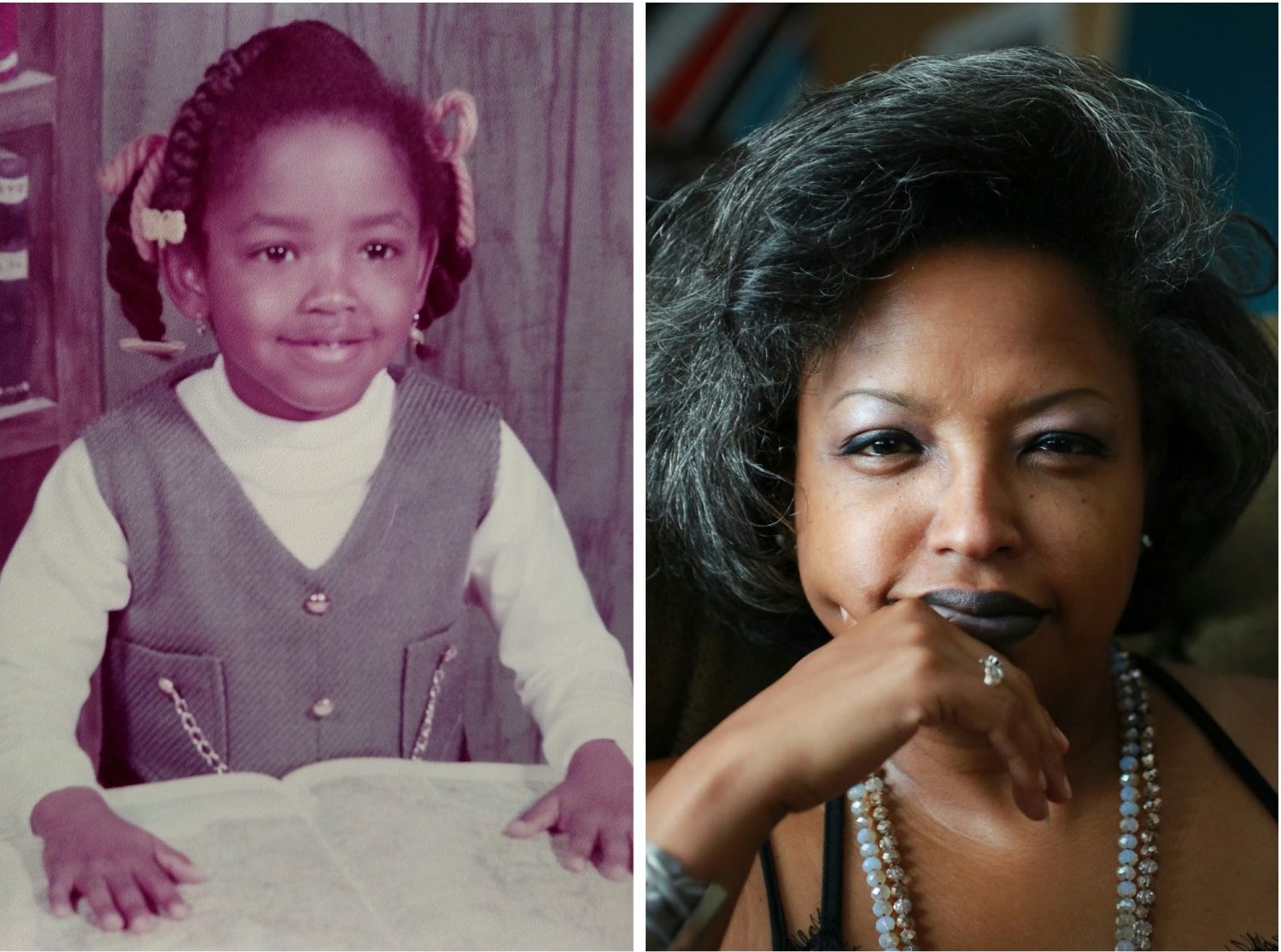
In closing, I must say that black women are perfectly capable of demonstrating what intimacy can look like with a conscious and steady dedication to ourselves and our loved ones, marriage, or not. The example that we have set is one of the realities that makes us who we are in social, personal and political terms, and it fills our lives with love and meaning, regardless of what others say or think about us. Nothing could be more powerful and purposeful than living a life that is intentionally and authentically connected to self and others and this is one reason that everyday, I am proud of who I am: a totally capable, ethical, beautiful, responsible, serious, and loving black woman.
© 2023 annalise fonza, Ph.D., MURP, M.Div., MPA
Updated 07/21/2025
 annalisefonza